



Why Does ALBION Use Milk Before Lotion? Inside the FLARUNÉ Skincare Method
Why Does ALBION Use Milk Before Lotion?
Open an ALBION skincare routine in Japan and you'll notice something unusual almost immediately.
The milk comes before the lotion.
For anyone accustomed to applying skincare from the thinnest texture to the richest, this can look backwards.
Milk—or emulsion—is usually something we expect near the end of a routine, after toner and serum.
ALBION has been doing the opposite for decades.
And within FLARUNÉ, that unusual order isn't a small application detail. It explains how the entire skincare line is designed.
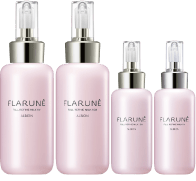
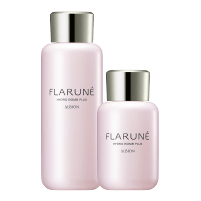
The newly updated FLARUNÉ range makes the idea particularly easy to see. Alongside its signature Full Refine Milk f, the brand has expanded the beginning of the routine with three new cleansing formulas: Quick Off Oil Cleansing, Cocoon Cream Cleansing and Moist Stringy Wash.

Put everything together and FLARUNÉ starts to look less like a collection of individual products and more like a very Japanese way of thinking about skin preparation.
“Milk First” Doesn't Mean Moisturiser First
The first thing to understand is that ALBION isn't asking you to apply your final moisturiser before your toner.
Its milk belongs to a Japanese skincare category generally known as:
先行乳液 — senkō nyūeki, or pre-lotion emulsion.
ALBION describes its version more specifically as an emulsion designed to focus on the stratum corneum.
Rather than primarily creating a protective film over the surface of the skin, the milk is applied immediately after cleansing to fill the stratum corneum with moisture, soften it and bring it into a more balanced condition.
Only then comes lotion.
According to ALBION, preparing freshly cleansed skin this way also helps the skincare that follows blend more readily into the skin.
So the FLARUNÉ sequence isn't really:
Moisturiser → Toner
It's better understood as:
Cleanse → Condition → Hydrate → Treat
That distinction makes the routine considerably less strange.
The FLARUNÉ Routine, Translated
Japanese skincare terminology can make the system even more confusing because familiar product names don't always describe exactly the same role they play in Western routines.
| FLARUNÉ Step | What You Might Expect | Its Role in the ALBION Routine |
|---|---|---|
|
|
Makeup remover | Removes makeup, sunscreen and impurities |
|
|
Cleanser | Cleans freshly exposed skin |
|
|
Moisturiser | Conditions the stratum corneum first |
|
|
Toner | Replenishes hydration after milk |
|
|
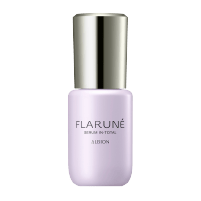
Treatment | Addresses targeted skin concerns |
|
|
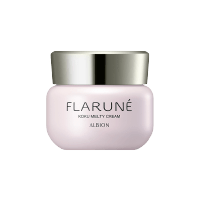
Final moisturiser | Completes the routine |
There is one useful exception.
ALBION notes that products specifically designed for immediate post-cleansing use should still follow their own instructions. The brand's Eclafutur t, for example, is used before the milk.
In other words, ALBION isn't blindly following a “milk always comes first” rule.
Product function determines the order.
Why Is ALBION So Interested in the Stratum Corneum?

The stratum corneum is the outermost part of the epidermis, and FLARUNÉ places it at the centre of the routine.
The latest Full Refine Milk f makes that especially obvious.
ALBION describes it as a new type of “tightening pre-lotion emulsion”, focusing on three visible consequences of better-conditioned skin:
moisture, texture/pores and dullness caused by dryness.
The intention is to leave the stratum corneum plump and moisturised while refining the appearance of texture and helping skin look clearer.
The formula also contains Heart Leaf Extract, an original ALBION moisturising ingredient derived from Madeira vine leaves cultivated on Miyakojima in Okinawa, alongside the Japanese bamboo-shoot peel extract used across much of the Lively line.
This is why calling Full Refine Milk f simply a “moisturiser” misses much of the point.
Within the routine, it behaves more like the foundation upon which the rest of the skincare is applied.
Why Does ALBION Recommend So Much Milk?
Another thing that can surprise first-time users is the amount.
ALBION recommends three pumps of its FLARUNÉ milk.
That sounds generous compared with the small amount of emulsion many people are accustomed to using.
The brand's explanation is connected to the same stratum-corneum philosophy: it wants enough product to distribute moisture thoroughly and evenly rather than simply coating parts of the skin surface. ALBION also recommends applying the milk with cotton because cotton can distribute it more uniformly across fine irregularities and around pores.
Whether someone personally prefers cotton or hands is another question, but it explains why the official method looks different from a conventional moisturiser routine.
The amount and application method are part of the system—not incidental instructions.
And Yes, Oily Skin Can Still Use a Pre-Lotion Milk
This is another common point of confusion.
If your skin already produces plenty of sebum, applying an emulsion immediately after cleansing can sound counterintuitive.
ALBION's answer is that emulsion isn't simply about adding oil. It is also intended to help maintain the skin's necessary moisture balance.
That's why FLARUNÉ milk comes in two textures.
M
Designed for normal to oily skin.
The texture is softer and lighter, while still leaving the stratum corneum moisturised and supple.
EM
Designed for normal to dry skin.
It has a richer, smoother base intended to create a more plump and resilient skin feel.
M and EM therefore aren't “regular” and “intensive” versions.
They are two textures built around different skin conditions.
In 2026, FLARUNÉ Reworked What Happens Before the Milk
This is where the latest FLARUNÉ releases become more interesting.
The hero milk already explains what ALBION wants to do after cleansing.
The new 2026 cleansing products address what happens immediately before it.
And instead of producing one universal cleanser, FLARUNÉ has created three noticeably different textures.
That makes the opening stages of the routine more deliberate:
remove → cleanse → condition.
Quick Off Oil Cleansing: Make the Removal Step Faster
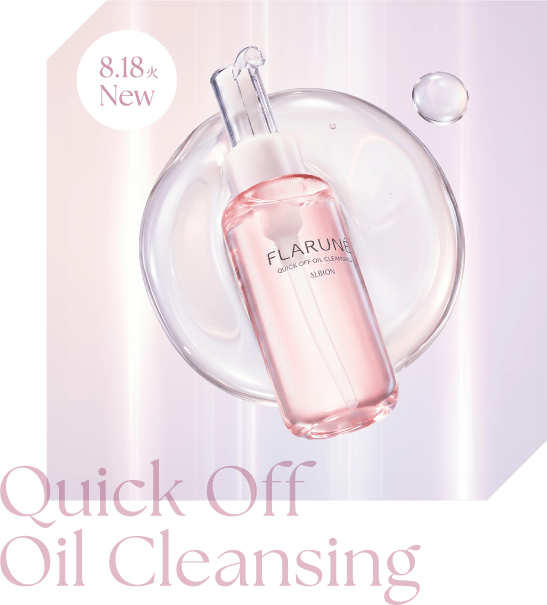
FLARUNÉ Quick Off Oil Cleansing is the straightforward option for removing resistant makeup.
Its light, fluid oil base is designed to blend rapidly with makeup, including waterproof formulas, while also removing pore impurities without requiring repeated rubbing.
ALBION emphasises the speed of this process with the phrase “瞬間なで落ち”—essentially describing makeup being swept away almost instantly with a gliding motion.
The finish is deliberately clean and smooth rather than rich or heavily emollient.
What's interesting here isn't a complicated active-ingredient story.
It's friction.
ALBION is trying to make the cleansing step quick enough that resistant makeup doesn't require prolonged manipulation of the skin.
Cocoon Cream Cleansing Takes the Opposite Approach
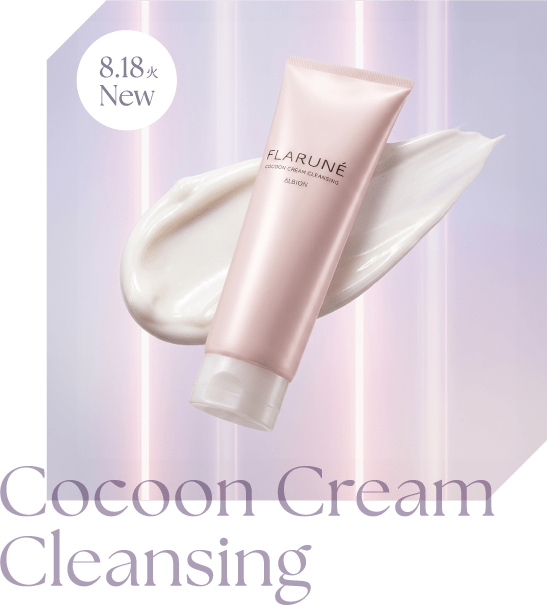
FLARUNÉ Cocoon Cream Cleansing isn't simply a richer version of the oil.
Its thick cream is designed to envelop the skin—hence the “Cocoon” name—while removing makeup without sacrificing as much of the moisturised feeling users with dry skin may want to preserve.
ALBION specifically positions it for skin where dryness is a concern and describes the post-cleansing result as moist, smooth and comfortable.
The contrast between the two cleansers is therefore partly about how you want cleansing to feel:
Quick Off Oil → fast, fluid, clean
Cocoon Cream → enveloping, rich, moisture-conscious
This emphasis on sensory texture appears repeatedly throughout FLARUNÉ.
Then There's the Strangely Named Moist Stringy Wash

The English name Moist Stringy Wash may sound unusual.
The Japanese description explains it better:
とろ密泡 — toro-mitsu awa
roughly, a dense, viscous foam.
Rather than producing a large cloud of airy bubbles, the cleanser creates a thicker foam designed to cling closely to fine skin texture and pores.
ALBION says the foam removes impurities from those small irregularities while retaining moisture, leaving the skin smooth rather than stripped.
This is a good example of something that can get lost when Japanese cosmetics are viewed only through ingredient lists.
Texture itself is part of the product design.
The oil needs to move quickly.
The cream needs to cushion.
The face wash needs to cling.
And the milk that follows needs to spread deeply and evenly across freshly cleansed skin.
FLARUNÉ Is Actually Two Seasonal Skincare Systems
There's another part of FLARUNÉ that makes more sense within Japanese beauty culture than it may at first glance.
The range is divided into Lively and Bright.
This isn't merely two versions of the same products.
ALBION connects them with different skin conditions and even different times of year.
Lively Line

The Lively range is designed around skin affected by falling temperatures, dryness and accumulated summer stress.
Its focus is moisture, suppleness and maintaining a healthy-looking complexion through the drier autumn and winter months.
The shared fragrance is also deliberately seasonal in feeling: citrus and herbs such as lemon, yuzu and spearmint are combined with sweetness and spice to create what ALBION calls a Spicy Herbal scent.
Bright Line


The Bright range shifts the emphasis toward clarity, brightening care and periods of greater UV exposure.
ALBION itself recommends Bright when transparency/brightening is the priority or during seasons when ultraviolet exposure becomes more concerning; Lively is recommended when moisture, elasticity and seasonal dryness matter more.
That seasonal division is quite different from simply creating “normal,” “dry” and “oily” ranges.
FLARUNÉ is responding not only to what your skin is, but to what is happening to it now.
The Bright Line Has Become More Than a Seasonal Alternative

The 2026 Bright renewal also deserves attention for another reason: Japanese beauty editors responded very strongly to it.
At the MAQUIA Best Cosmetics 2026 First Half Awards, the FLARUNÉ Bright range took No.1 in the Skincare Line category. The winning routine included Bright Refine Milk f M/EM, Bright Fresh Lotion, Bright Serum in Total and Repair Confi Bright Cream.
The Bright Refine Milk f also placed No.2 in MAQUIA's Emulsion category.
What's interesting is how MAQUIA discusses the range.
The publication doesn't treat the milk as an isolated brightening product. It highlights the familiar ALBION milk-first structure, with the updated Bright line layering brightening care across milk, lotion, serum and cream.
The medicated Bright Refine Milk f contains a vitamin C derivative as a brightening active, alongside ingredients including Japanese indigo extract and ALBION's original Kabuchii extract, derived from the peel of an Okinawan citrus.
Again, the underlying architecture hasn't changed:
the routine still begins by conditioning freshly cleansed skin with milk.
Bright simply gives that architecture a different purpose.
This Is Why FLARUNÉ Makes More Sense as a Routine Than a Shelf of Products
Viewed individually, the range can look unnecessarily complicated.
Why an oil and a cream cleanser?
Why another face wash?
Why two milks?
Why does the milk come before lotion?
Why is there a separate Bright range?
But there is a consistent sequence underneath it.
1. Remove
Take off makeup and sunscreen without unnecessary friction.
2. Cleanse
Remove what remains while preserving a comfortable skin feel.
3. Condition
Use the pre-lotion milk to soften and moisturise the stratum corneum.
4. Hydrate
Follow with lotion.
5. Treat
Introduce targeted serum care.
6. Complete
Finish the routine with cream when needed.
Once you see FLARUNÉ this way, individual products stop looking like overlapping variations.
They're different parts of a sequence.
A Note for Anyone New to Japanese Skincare
You don't have to adopt every Japanese skincare convention to understand why FLARUNÉ is interesting.
The important lesson isn't:
“Milk before lotion is better than lotion before milk.”
ALBION's system is designed around its own formulas and should be understood in that context.
The more interesting point is that product texture alone doesn't necessarily determine skincare order.
A thicker-looking product can be formulated as an early conditioning step.
A watery lotion can intentionally come afterwards.
A serum designed for immediate post-cleansing application can even precede both.
That's why simply rearranging FLARUNÉ into a familiar “thinnest to thickest” routine misses the formulation logic the products were created around.
Frequently Asked Questions
Why does ALBION use milk before lotion?
ALBION describes its milk as a pre-lotion emulsion focused on conditioning the stratum corneum. It is used immediately after cleansing to provide moisture, soften the stratum corneum and prepare the skin for the skincare that follows.
Is FLARUNÉ Milk a moisturiser?
It is an emulsion, but its role differs from the final moisturising emulsion common in many skincare routines. FLARUNÉ Milk is specifically designed to be used before lotion as an early conditioning step.
Do I use ALBION serum before or after milk?
It depends on the product. ALBION says products should follow their individually designed application order. For example, Eclafutur t is specifically formulated for use immediately after cleansing and therefore comes before milk.
Why does ALBION recommend applying milk with cotton?
ALBION says cotton makes it easier to distribute the emulsion evenly over fine irregularities and around pores, helping moisture reach the stratum corneum more uniformly.
What is the difference between FLARUNÉ M and EM?
M is designed for normal-to-oily skin and has a softer, lighter feel. EM is designed for normal-to-dry skin and has a richer, smoother texture.
What is the difference between FLARUNÉ Lively and Bright?
Lively emphasises moisture and elasticity and is particularly suited to periods when dryness is a concern. Bright focuses more strongly on clarity and brightening care and is positioned for seasons when UV exposure is more prominent.
What are the new FLARUNÉ cleansing products?
The current FLARUNÉ lineup includes Quick Off Oil Cleansing, Cocoon Cream Cleansing and Moist Stringy Wash, covering rapid makeup removal, richer moisture-conscious cleansing and dense-foam face washing respectively.
FLARUNÉ Makes More Sense Once You Stop Reading It Like Western Skincare
At first glance, ALBION's famous milk-first routine can look like skincare performed in the wrong order.
It isn't.
It's simply built around a different definition of what an emulsion is supposed to do.
Within FLARUNÉ, the milk isn't waiting at the end of the routine to seal everything in. It has an earlier job: condition freshly cleansed skin before the rest of the routine begins.
The 2026 additions make that philosophy easier to see.
Quick Off Oil removes resistant makeup quickly.
Cocoon Cream turns removal into a more cushioned experience.
Moist Stringy Wash uses dense, adhesive foam to cleanse the exposed skin.
Then Full Refine Milk f begins the conditioning stage that has long distinguished ALBION skincare.
And depending on season and skin condition, that same architecture can shift from the moisture-and-suppleness focus of Lively to the brightening focus of Bright—a line that has already received major recognition from Japanese beauty editors in 2026.
Seen from that perspective, FLARUNÉ isn't particularly complicated.
Its logic is actually quite orderly:
remove, cleanse, condition, hydrate, treat.
The unfamiliar part is simply that ALBION decided the skin should be conditioned before the lotion arrives.
