



LUNASOL Skin-Fusing Filter vs SUQQU, KANEBO & RMK: Four Japanese Foundations, Four Ways to Make Coverage Disappear
The most interesting Japanese foundations in 2026 aren't competing to look sheer.
They're trying to make coverage itself less visible.
That's an important difference.
A foundation can cover redness, pores and uneven tone extremely well, but leave behind another problem: a flat, uniform surface that immediately reads as foundation.
Several major Japanese brands are now tackling that contradiction from different directions.
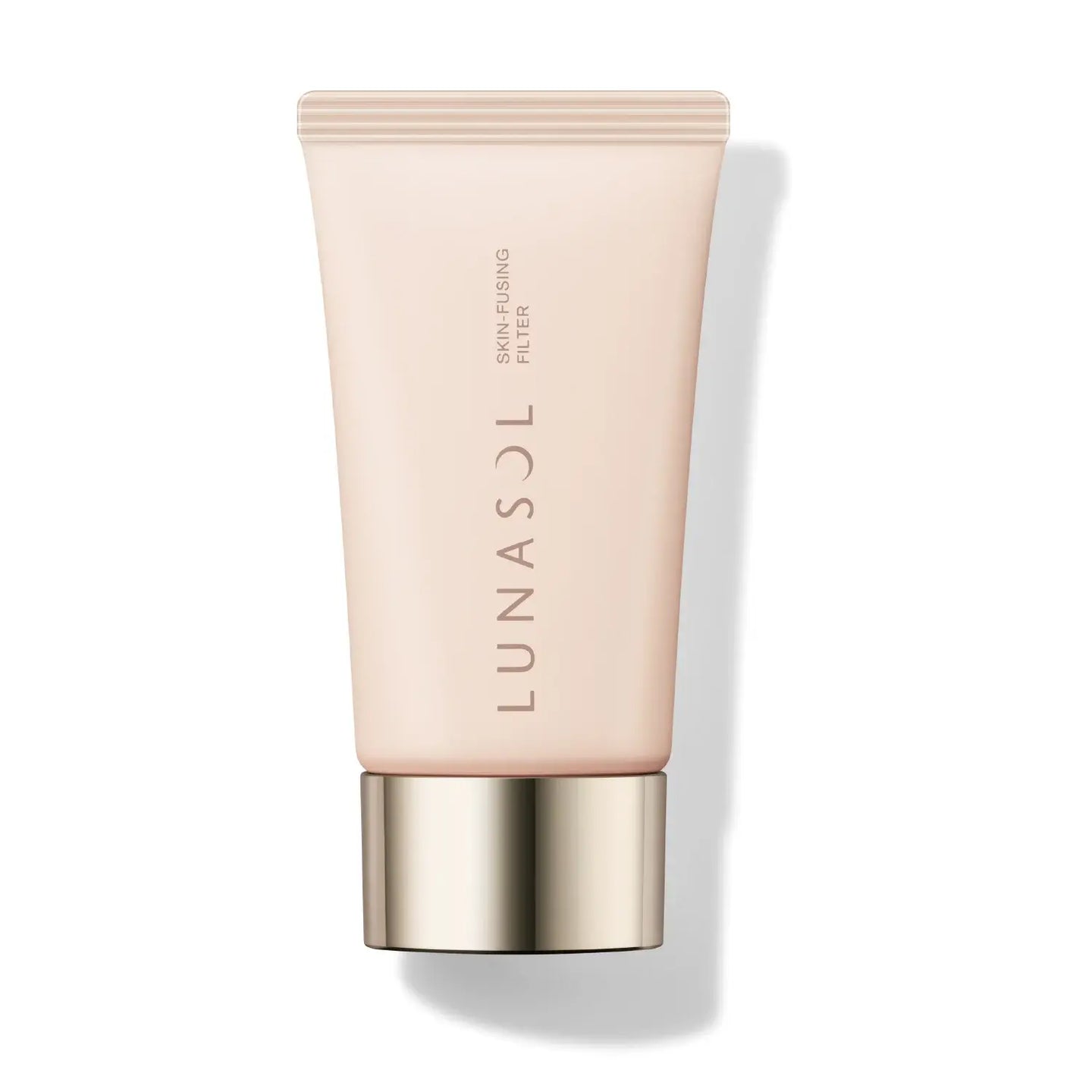
LUNASOL Skin-Fusing Filter uses beige, blue and orange light to rebuild dimension after coverage.

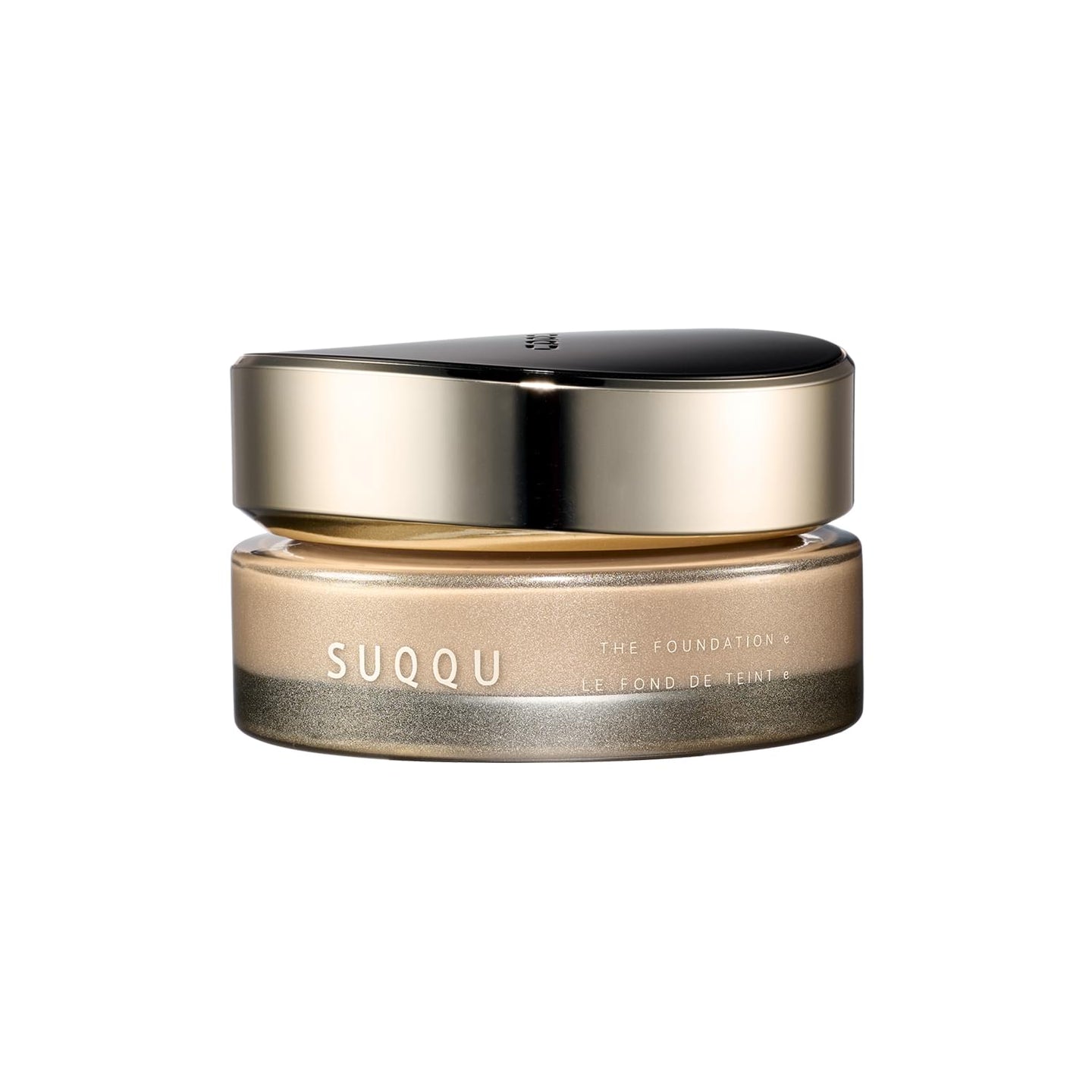
SUQQU The Foundation e reduces reliance on conventional pigment coverage and uses optical correction to create a clearer foundation film.

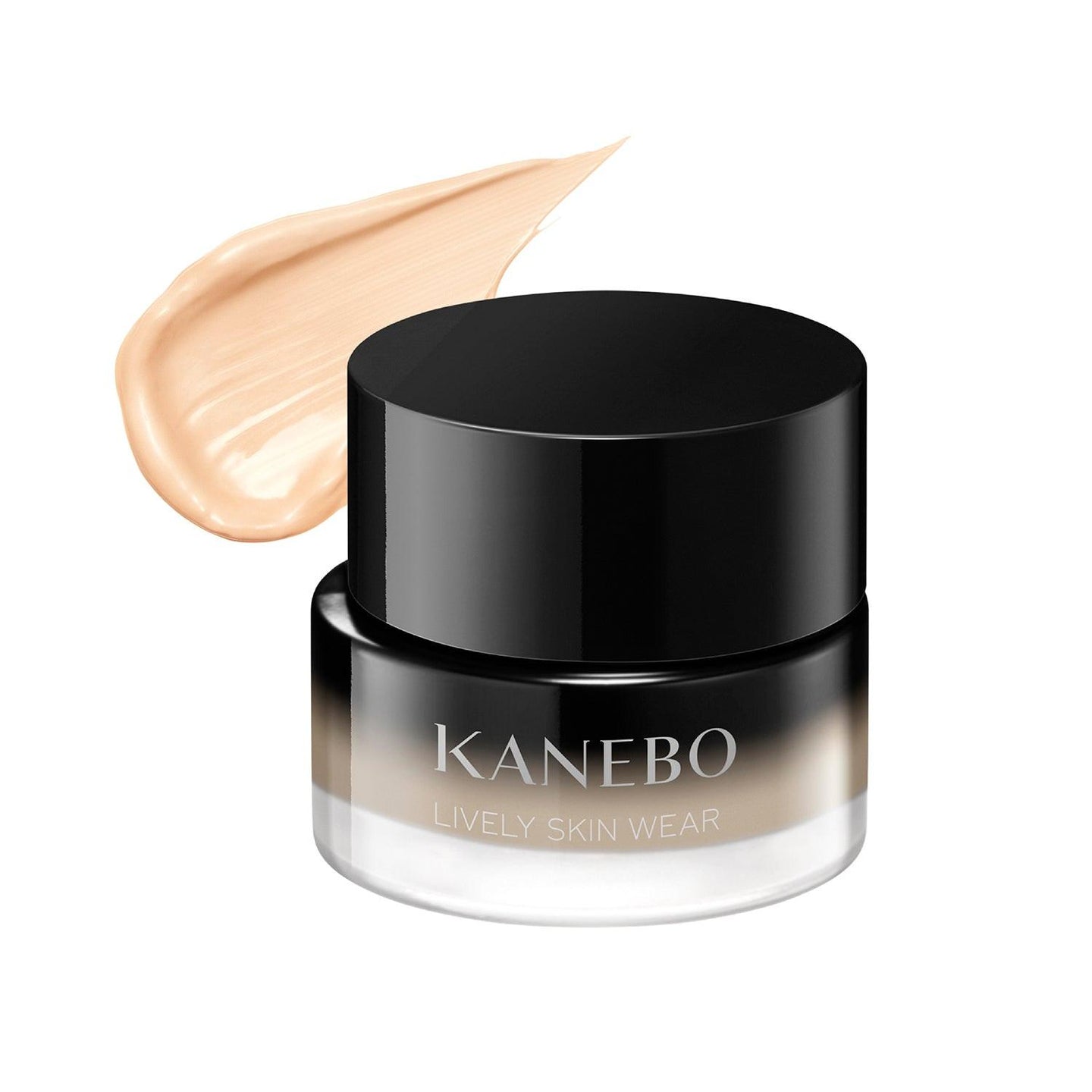
KANEBO Lively Skin Wear II uses transparent gel, coloured oils and light diffusion so coverage appears to disappear into the complexion.

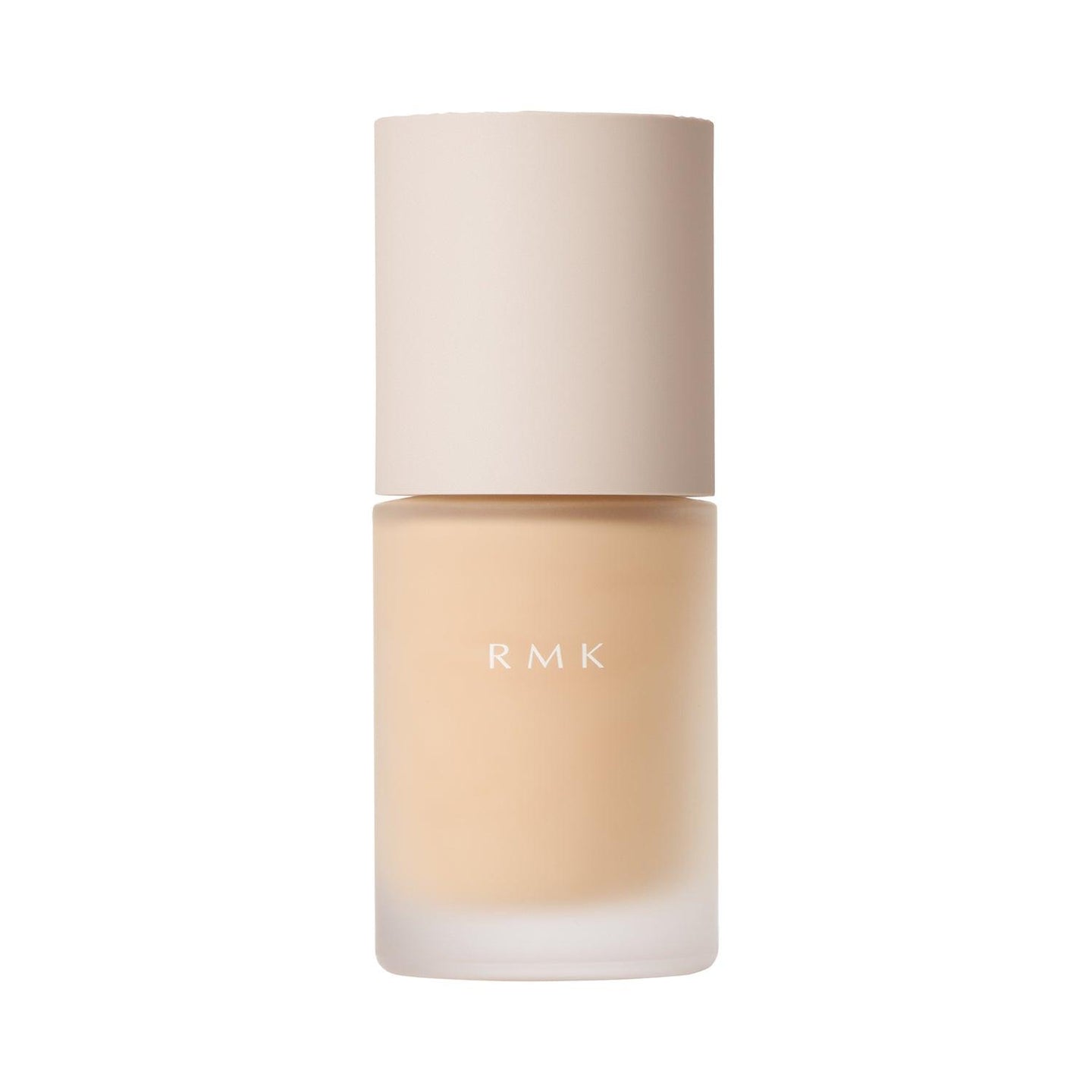
RMK Liquid Foundation Flawless Coverage Plus keeps the film thinner and lighter, using light and shadow to retain the natural architecture of the face.

They're close enough to compete for the same customer.
But they don't create the same skin.
The Four Foundations at a Glance
|
|
|
|
|
|
|---|---|---|---|---|
| Texture | Cream | Cream | Serum-like cream | Liquid |
| Coverage direction | High | High | High but optically transparent | Medium-high / buildable |
| Finish | Polished dimensional glow | Rich, clear evolving glow | Lively skin-like glow | Lightweight dimensional glow |
| Main technology idea | Colour + light + shadow | Optical correction + clear film | Light diffusion inside transparent film | Seamless film + light/shadow |
| Best shorthand | Sculpted skin | Polished skin | Alive skin | Effortless skin |
| Japan shades | 5 | 12 | 10 | 9 |
| SPF | SPF23 PA++ | SPF25/30 PA++ depending on shade | SPF4 PA+ | Varies by shade; around SPF20–25 |
| Format | 30g | 30g | 30g | 30ml |
Product specifications are based on the brands' current Japanese ranges.
The table makes them look relatively similar.
On skin, their priorities are much easier to separate.
LUNASOL Skin-Fusing Filter: Coverage Through the Eyes of an Eyeshadow Brand

LUNASOL's new foundation makes more sense when you remember what the brand is famous for.
Eyeshadow.
The new Skin-Fusing Filter, launched September 4, 2026, is part of LUNASOL's new 4D Beige concept. The brand describes beige as the colour that enhances the wearer rather than asserting itself as a colour in its own right.
And unusually, LUNASOL says it applied knowledge accumulated through developing eyeshadow directly to foundation.
That's not just storytelling.
Eyeshadow and foundation share a surprisingly similar problem:
How do you use colour and light to change dimension without making the product itself obvious?
LUNASOL's answer is a carefully constructed beige.
LUNASOL Doesn't Use Beige as a Flat Colour
Skin-Fusing Filter begins with Clarity Brown Powder, which creates a clear beige intended to resist muddiness.
LUNASOL then introduces two different optical effects.
Orange Glow Pearl combines with blue light to recreate the visual depth associated with natural skin.
Blue Shade Pearl behaves differently depending on the contours of the face: high areas appear brighter while lower areas appear darker, helping natural facial dimension remain visible.
This is the central idea behind the foundation.
Most coverage makes colour more uniform.
But real faces aren't uniform.
Foreheads, cheeks, noses and jawlines catch different amounts of light. The small colour differences beneath natural skin contribute to our perception of depth.
LUNASOL therefore covers imperfections and then deliberately reintroduces optical variation.
MAQUIA highlighted the same point in its Autumn 2026 coverage, describing the formula as a clear beige layered with orange and blue light to reproduce the depth and transparency of bare skin.
That's why this isn't simply another glowing cream foundation.
LUNASOL is using colour to stop coverage from flattening the face.
And It Has More Coverage Than You Might Expect
The official LUNASOL foundation guide rates Skin-Fusing Filter at its maximum 5/5 for coverage, while glow sits at 3/5.
That is useful context.
This isn't a sheer skin tint masquerading as a “natural finish” foundation.
The Cover Fit Veil is designed to adhere particularly well where correction is needed, covering uneven colour and surface irregularities without becoming powdery when layered.
A flexible network film then distributes and holds pigment evenly while smoothing the skin surface.
The result is meant to remain:
clear,
firm-looking,
smooth,
and dimensional.
美的 describes the finish as semi-glow, emphasising the combination of clear dimension and correction rather than extreme dewiness.
That immediately separates LUNASOL from some of its closest competitors.
LUNASOL vs SUQQU: Two New Cream Foundations Launched on the Same Day

This is probably the comparison shoppers will find most useful.
Both LUNASOL Skin-Fusing Filter and SUQQU The Foundation e launched in Japan on September 4, 2026.
Both are Japanese prestige cream foundations.
Both promise substantial correction without an obviously heavy finish.
Both use light as part of that correction.
And yet they are almost opposite interpretations of luxury foundation.
LUNASOL is interested in space.
SUQQU is interested in time.
That's the easiest distinction.
LUNASOL Builds Dimension Across the Face
LUNASOL asks:
Where should the face look bright, and where should it retain shadow?
Its blue-shade pearl, orange light and clear beige are designed to preserve spatial depth.
Think:
high point → light
low point → shadow
skin → clear beige
The face remains visibly three-dimensional even after imperfections have been covered.

SUQQU Builds Glow Across the Day

SUQQU asks a different question:
What should happen to foundation as skin changes over time?
The renewed The Foundation e continues SUQQU's signature utsuri-kawaru tsuya—its “evolving glow.”
Natural sebum emerging during wear isn't treated purely as something to suppress. The formula is designed so that changes in the skin contribute to the appearance of the glow.
The 2026 version introduces its Glow Clarity System, aiming for a smoother, clearer film while combining conventional coverage with optical correction.
So:
LUNASOL: light moves across facial structure.
SUQQU: glow changes across time.
That's a much more meaningful distinction than simply asking which one is glowier.
Their Coverage Strategy Is Different Too
SUQQU reduced the amount of conventional powder pigment in The Foundation e and supplements it with optical correction, including blurring and smoothing powders.
Its objective is a highly perfected, “noiseless” complexion without relying entirely on opacity.
LUNASOL doesn't retreat from coverage in the same way.
Skin-Fusing Filter still explicitly offers strong correction through Cover Fit Veil.
What it tries to prevent is the flatness that strong correction can create.
So if we reduce both formulas to one line:
SUQQU makes high coverage look lighter by changing how imperfections are corrected.
LUNASOL makes high coverage look more natural by rebuilding dimension after correction.
They arrive at similar territory through different routes.
The Finish: LUNASOL Is Cleaner, SUQQU Is Richer
There is also an aesthetic difference.
SUQQU's cream-foundation identity remains unmistakably luxurious: rich texture, polished skin and glow that becomes more integrated as the day progresses.
LUNASOL's language is cleaner.
The brand repeatedly talks about:
clarity, clean dimension, smooth planes and transparent shadow.
If you dislike foundations that look overtly dewy, Skin-Fusing Filter is therefore particularly interesting.
It doesn't need intense shine to make the face dimensional.
Light and colour are doing more of that work.
LUNASOL vs KANEBO: Two Foundations From the Same Beauty Group, Two Completely Different Illusions
The comparison with KANEBO Lively Skin Wear II is even more fascinating.
Both brands sit within Kanebo Cosmetics, yet their current foundations solve coverage in noticeably different ways.
Lively Skin Wear II describes its effect as:
“disappearing coverage.”
KANEBO combines light-diffusing coloured oil with a transparent gel capable of creating a substantial film.
Instead of depending exclusively on opaque pigment to hide the skin, light enters the film and scatters both at its surface and internally.
The visual idea is clever:
there can be a substantial film on the skin without the eye interpreting that film as heavy coverage.
KANEBO Wants the Foundation to Disappear

KANEBO's objective is lively skin.
It wants you to notice:
moisture,
movement,
light,
and the sense that the complexion is alive.
The company even tested finished skin using Kao's impression-evaluation AI; according to KANEBO, the system judged the made-up skin as appearing like bare skin. That's company-generated testing rather than an independent consumer study, but it illustrates exactly what the formula is trying to achieve.
LUNASOL's objective is different.
It doesn't necessarily want you to forget that the complexion has been perfected.
It wants that perfection to reveal cleaner facial architecture.
So:
KANEBO disguises coverage as bare skin.
LUNASOL disguises coverage as dimension.
The Difference Is Especially Clear in Their Use of Light
KANEBO uses broad light diffusion.
Light enters and scatters through the foundation film, helping obscure imperfections without requiring the visual density associated with conventional pigment coverage.
LUNASOL's light is more directional.
Blue Shade Pearl deliberately changes how high and low areas appear.
Orange Glow Pearl contributes another layer of skin-like depth.
Clarity Brown Powder keeps the underlying beige from becoming muddy.
KANEBO says:
scatter the light.
LUNASOL says:
place the light.
That is probably the clearest technical difference between them.
LUNASOL vs RMK: Similar Price Territory, Different Levels of Polish
RMK Liquid Foundation Flawless Coverage Plus is the most useful comparison for someone who likes Japanese department-store foundations but doesn't necessarily want a rich cream.
The current formula has nine shades in Japan and uses a liquid texture designed to melt seamlessly into the complexion while maintaining precise coverage.
RMK describes its finish as three-dimensional glow viewed beautifully from every angle.
That sounds surprisingly close to LUNASOL.
But the visual character is different.
RMK Is About the Face in Motion

RMK's foundation language is relaxed.
The finish is intended to retain the wearer's natural bone structure while feeling light—as though the skin can still “breathe.”
It uses light and shadow to make the complexion look dimensional from the front, side and diagonal rather than creating a uniformly perfected mask.
LUNASOL feels more deliberate.
Its 4D Beige system is engineered around:
clear beige,
blue light,
orange light,
transparent-looking shadow,
and a tightly adhering correction veil.
The difference isn't that RMK looks natural and LUNASOL looks unnatural.
Both pursue natural-looking dimension.
It's the degree of polish.
RMK leaves more of the personality of bare skin visible.
LUNASOL creates a more deliberately finished version of bare skin.
Four Foundations, Four Different Definitions of “Skin-Like”
This is where comparing specifications stops being enough.
All four brands use variations of the same vocabulary:
natural,
seamless,
glow,
coverage,
dimension.
But “skin-like” means something different to each of them.
LUNASOL — Skin-Like Through Colour
Natural skin has colour depth.
LUNASOL reconstructs it using beige, orange and blue.
SUQQU — Skin-Like Through Time
Natural skin changes throughout the day.
SUQQU allows its glow to change with it.
KANEBO — Skin-Like Through Light Transmission
Natural skin isn't opaque.
KANEBO creates a foundation film that takes in and diffuses substantial light.
RMK — Skin-Like Through Thinness and Movement
Natural skin has visible structure and moves with expression.
RMK keeps the complexion light and seamless enough for that architecture to remain apparent.
That distinction is more useful than labelling all four “natural glow foundations.”
What About Dry Skin?
For very dry skin, texture matters as much as finish.
KANEBO Lively Skin Wear II places particularly strong emphasis on its serum-foundation character and long-lasting moisture.
SUQQU The Foundation e is also a rich cream formula with an extensive moisturizing component and is the more traditionally luxurious option of the four.
LUNASOL isn't devoid of skincare ingredients. Skin-Fusing Filter contains seven highlighted moisturizing ingredients, including niacinamide, hyaluronic acid, fermented soy milk extract, watercress extract, shea butter, olive oil and jojoba oil.
But skincare isn't the main story.
Its strongest reason to exist is still optical design.
RMK sits at the lighter end texturally, making it particularly appealing when you want dimensional coverage without the sensory richness of a classic cream foundation.
What About Pores and Uneven Texture?
This is where LUNASOL becomes particularly competitive.
Its Cover Fit Veil is designed to stay over areas requiring correction and cover both colour unevenness and surface irregularities. The flexible film also smooths the skin surface.
That makes Skin-Fusing Filter especially relevant if the concern isn't simply redness or pigmentation but the combination of:
pores,
uneven texture,
uneven tone,
and loss of facial definition after applying foundation.
KANEBO takes a more optical approach to hiding those irregularities.
SUQQU combines optical and textural correction.
RMK prioritises seamlessness and a lighter visual impression.
So Which Foundation Matches Which Finish?
Rather than declaring one universally better, the differences can be reduced to four finish priorities.
Choose LUNASOL Skin-Fusing Filter when:
you want substantial correction but dislike the flatness that often comes with high coverage. Its strongest feature is the way colour, light and shadow preserve facial dimension.
Consider SUQQU The Foundation e when:
you like a richer luxury cream texture and want an exceptionally polished complexion whose glow is designed to evolve as the foundation settles and natural sebum emerges.
Consider KANEBO Lively Skin Wear II when:
your priority is high correction that still creates the visual impression of lively bare skin, particularly if moisture and serum-like comfort matter.
Consider RMK Liquid Foundation Flawless Coverage Plus when:
you prefer a lighter liquid texture and a less formal, more effortless version of three-dimensional glowing skin.
Where LUNASOL Is Doing Something Genuinely Different

LUNASOL didn't need another foundation that simply promised better glow.
Its own Radiant Flow Mesh Compact already won first place in both VOCE's cushion/powder foundation category and MAQUIA's cushion foundation category for the first half of 2026.
Skin-Fusing Filter goes somewhere else.
It brings LUNASOL's colour-makeup expertise into complexion.
And that's why the accompanying Eye Coloration N 26 Skin-Fusing matters to the story even if you never buy the eyeshadow.
Both products follow the same 4D Beige rules:
powder should disappear,
the surface should look smooth,
light should connect rather than sit in isolated sparkles,
and shadow should remain clear rather than muddy.
On the eyes, LUNASOL uses translucent brown, reddish shadow and gradations of light to make the eyelid itself look more dimensional.
On the face, it uses beige, orange and blue to do essentially the same thing.
That makes Skin-Fusing Filter less like a foundation developed by a skincare brand and more like a foundation developed by people who understand colour.
And in a year when so many Japanese foundations are trying to make coverage invisible, that gives LUNASOL a fairly clear position.
SUQQU makes coverage clearer.
KANEBO makes it disappear into light.
RMK makes it feel lighter.
LUNASOL turns it back into dimension.
For a brand that has spent years perfecting beige eyeshadow, that feels like a surprisingly logical place for its foundation to end up.
