

INOUI Eyes 12: How to Read Japan’s Most Unusual Five-Colour Eyeshadow Palette
At first glance, the new INOUI Eyes 12 is a difficult palette to understand.
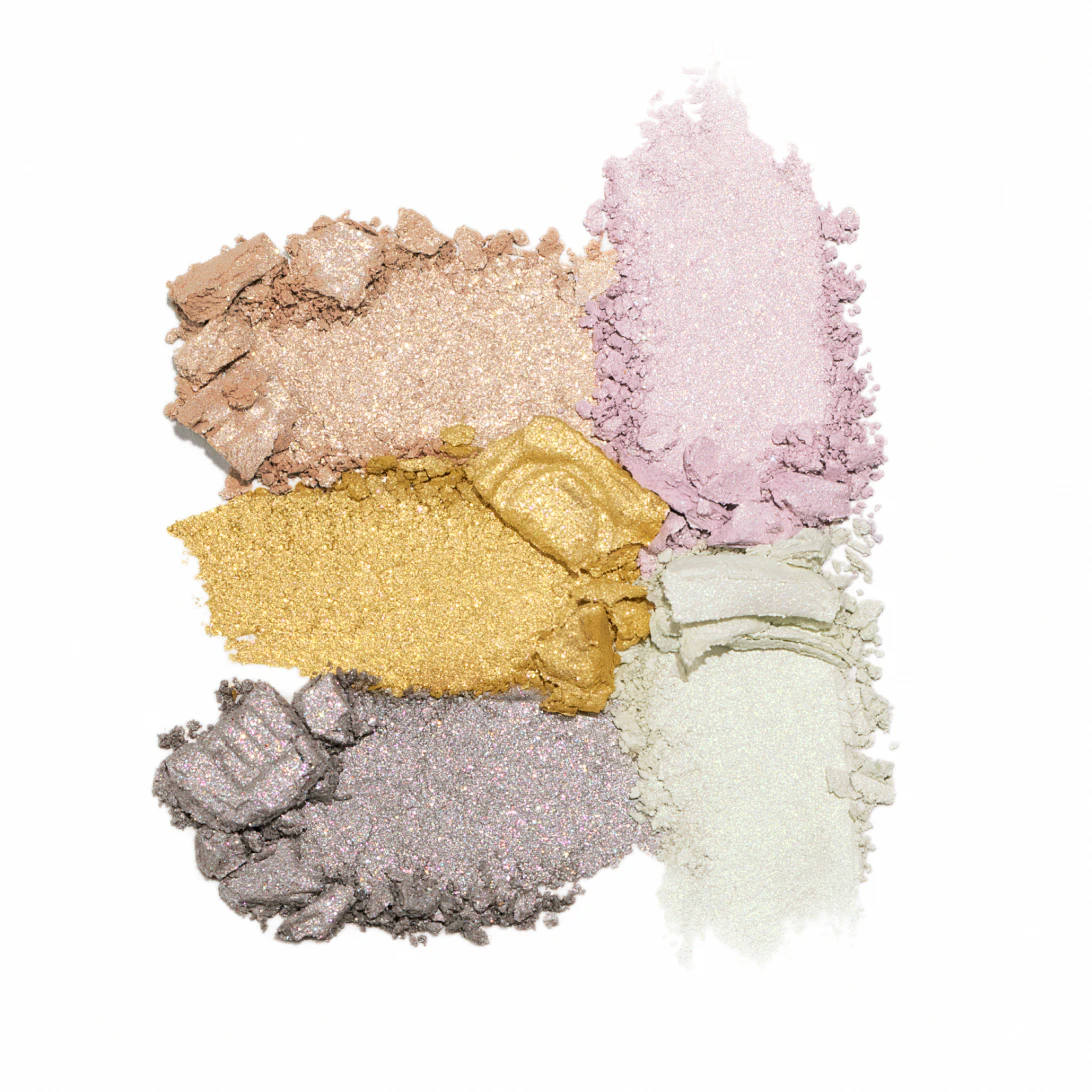
There is pastel pink.
Pastel green.
Champagne gold.
Yellow gold.
And a muted grey.
Put those five colours together and it hardly resembles the brown, beige or rose palettes that dominate Japanese department-store beauty.
But that is precisely why Eyes 12 is interesting.
The mistake is trying to read it as a conventional five-colour eyeshadow palette.
INOUI Eyes is built around light before it is built around colour.
The original Eyes formula was developed to combine five different light effects, using translucent colour and differences in reflection to emphasise the natural curves, hollows and dimensions around each person's eyes.
The new limited Eyes 12, launching in Japan on 21 August 2026, pushes that idea further than any previous INOUI palette.
Instead of using dark colour to manufacture depth, it uses five surprisingly different translucent shades to make the structure already present around the eyes more visible.
And that makes Eyes 12 an unusually good way to understand what INOUI makeup is actually trying to do.
First: INOUI Eyes Is Not Really a Five-Colour Gradient Palette

Most Japanese eyeshadow palettes are relatively easy to decode.
A light shade prepares the eyelid.
A medium colour establishes the main tone.
A darker shade defines the outer corner or lash line.
A pearl or glitter adds light.
INOUI Eyes doesn't follow that hierarchy quite so strictly.
The brand describes the palette as containing five light effects designed around the curved surface of the eye.
The powders are coated with rich oils so they melt smoothly into the skin, while differences in reflected light help create delicate shadow and dimension according to the natural shape of the eyelid.
In other words, the five pans aren't simply five stages of one gradient.
They are five different ways of interacting with light.
That distinction explains a lot about the palette—including why some INOUI Eyes combinations can look surprisingly subtle in the pan yet considerably more dimensional once applied.
So What Exactly Is “Light” Doing?

Think about an eye without makeup.
The centre of the eyelid catches more light.
The eye socket naturally recedes.
The inner corner reflects light differently from the outer corner.
The brow bone changes again as the face moves.
Traditional eyeshadow exaggerates those differences with colour.
INOUI tries to exaggerate them with reflection.
A more transparent reflective shade can visually bring an area forward.
A subdued shade can allow a natural hollow to appear deeper.
A softly luminous colour can connect the two without producing an obvious stripe of eyeshadow.
This is why INOUI repeatedly uses the language of 造形 — form or structure — rather than simply talking about colour payoff.
The objective isn't to paint a new eye shape over your own.
It's to make the existing one easier to see.
Eyes 12 Takes This Idea Somewhere New
Earlier INOUI palettes are relatively easy to categorise.
01 is the natural beige.
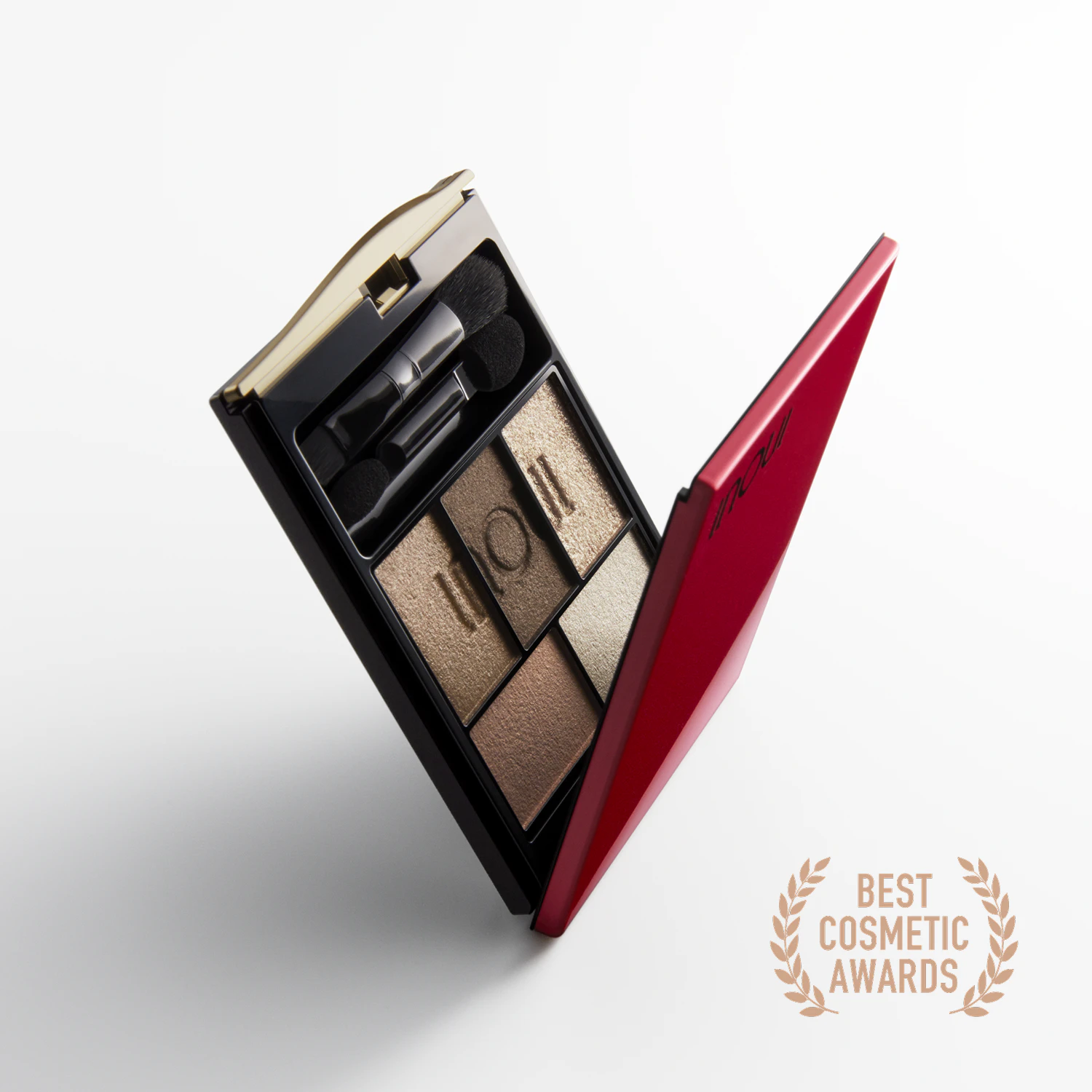
02 is a transparent greyish brown.
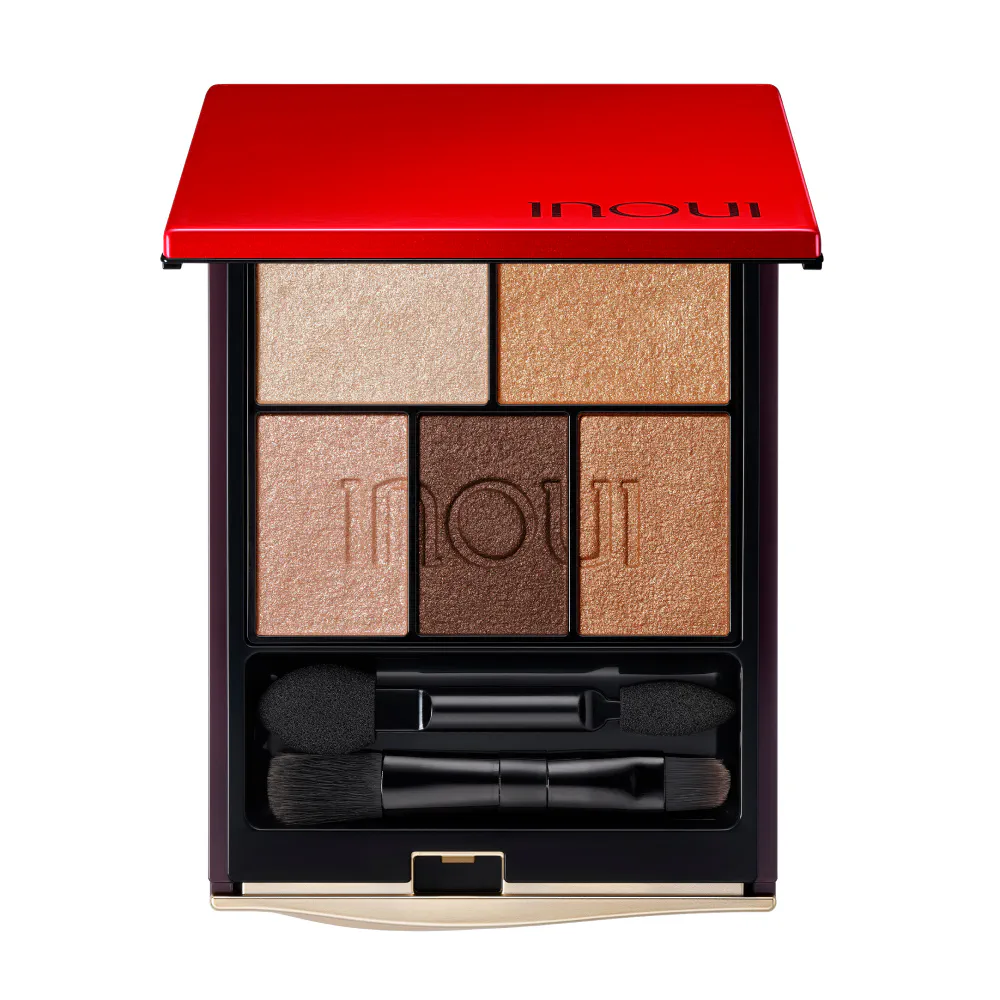
03 introduces a brighter orange-brown.
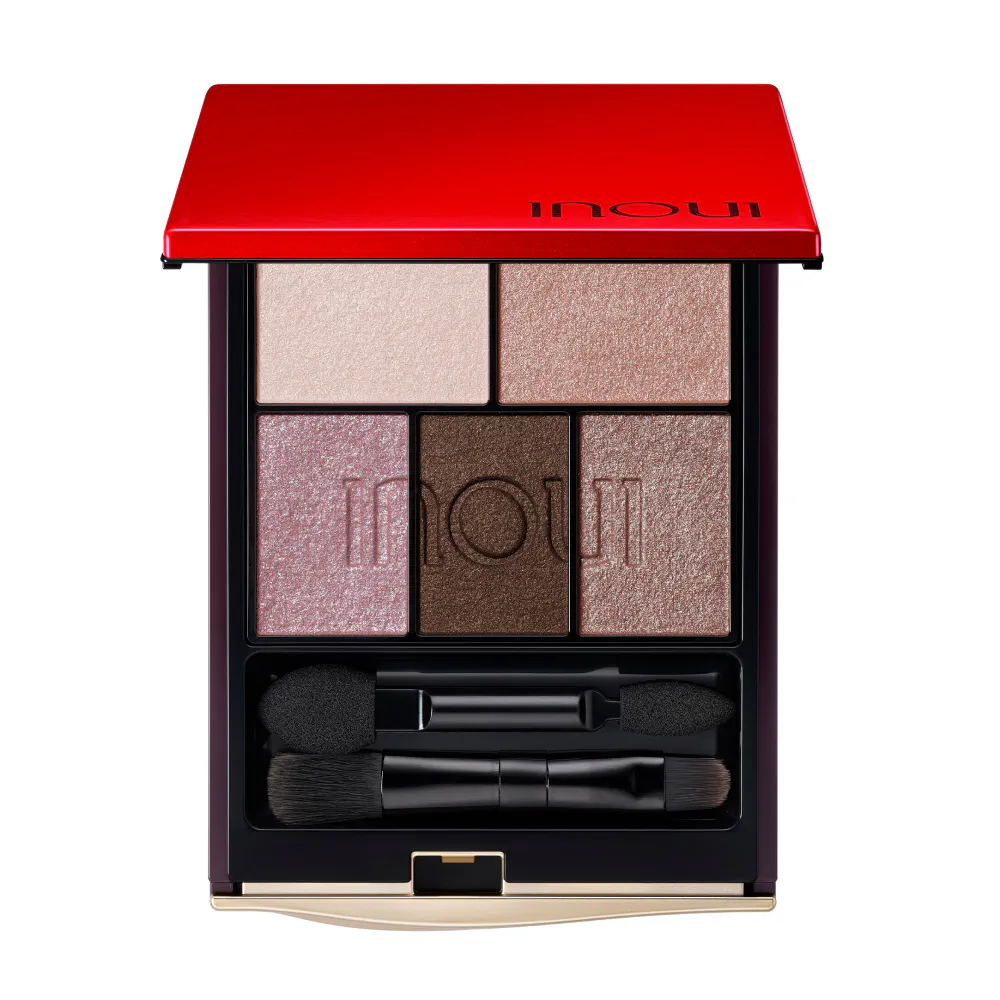
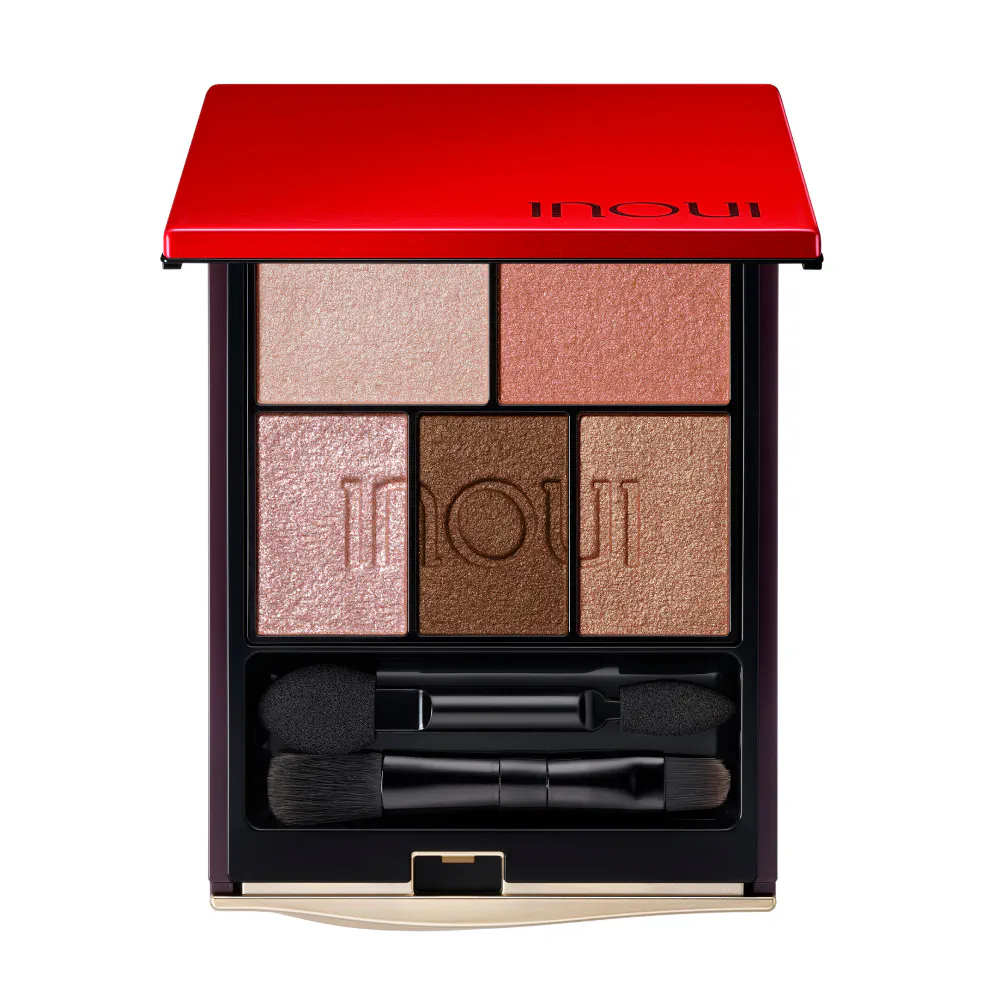
04, currently one of the popular shades on Shiseido's Japanese online store, creates greater depth through mauve brown.
Then there are the more conceptual monochrome palettes:
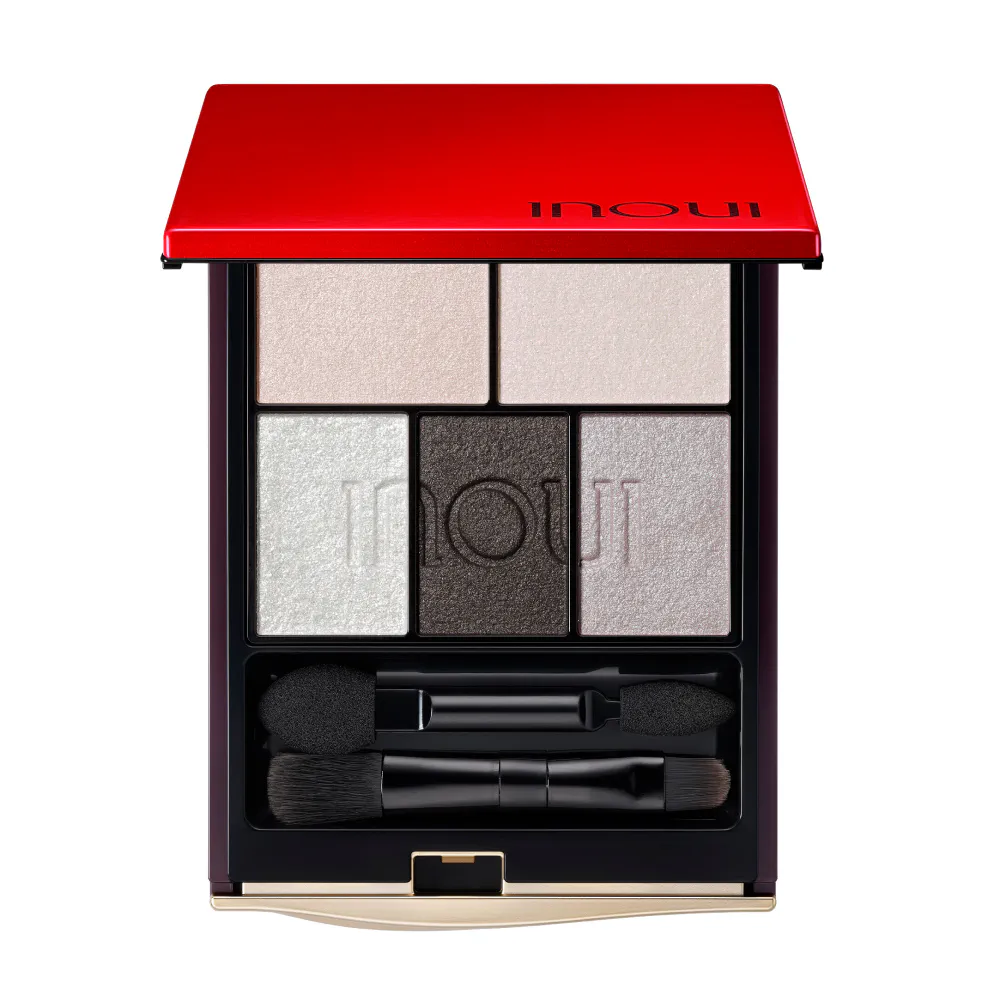
05 explores cool white.
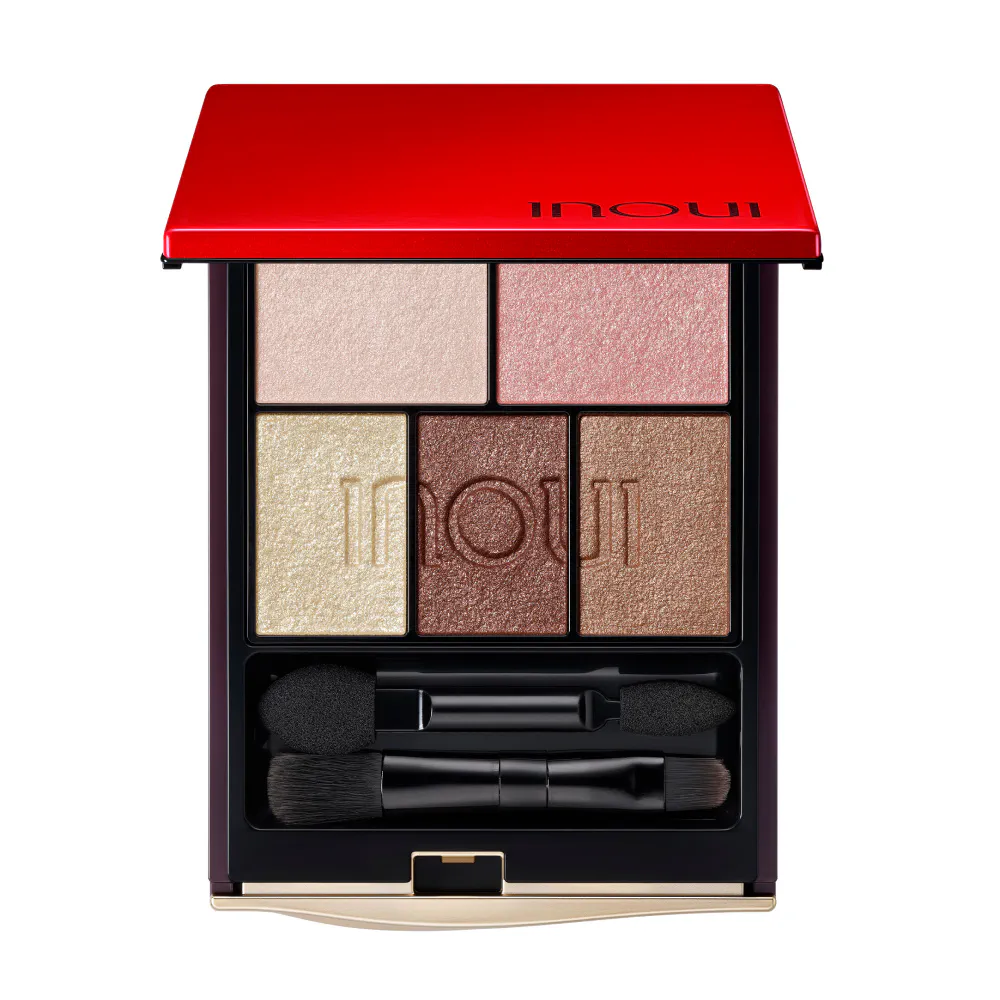
06 explores warm brown.
The limited 10 and 11 released in April 2026 continued experimenting with transparency: 10 combines deeper greyish colour with clear light, while 11 uses luminous skin tones for a softer effect.
12 breaks away from all of them.
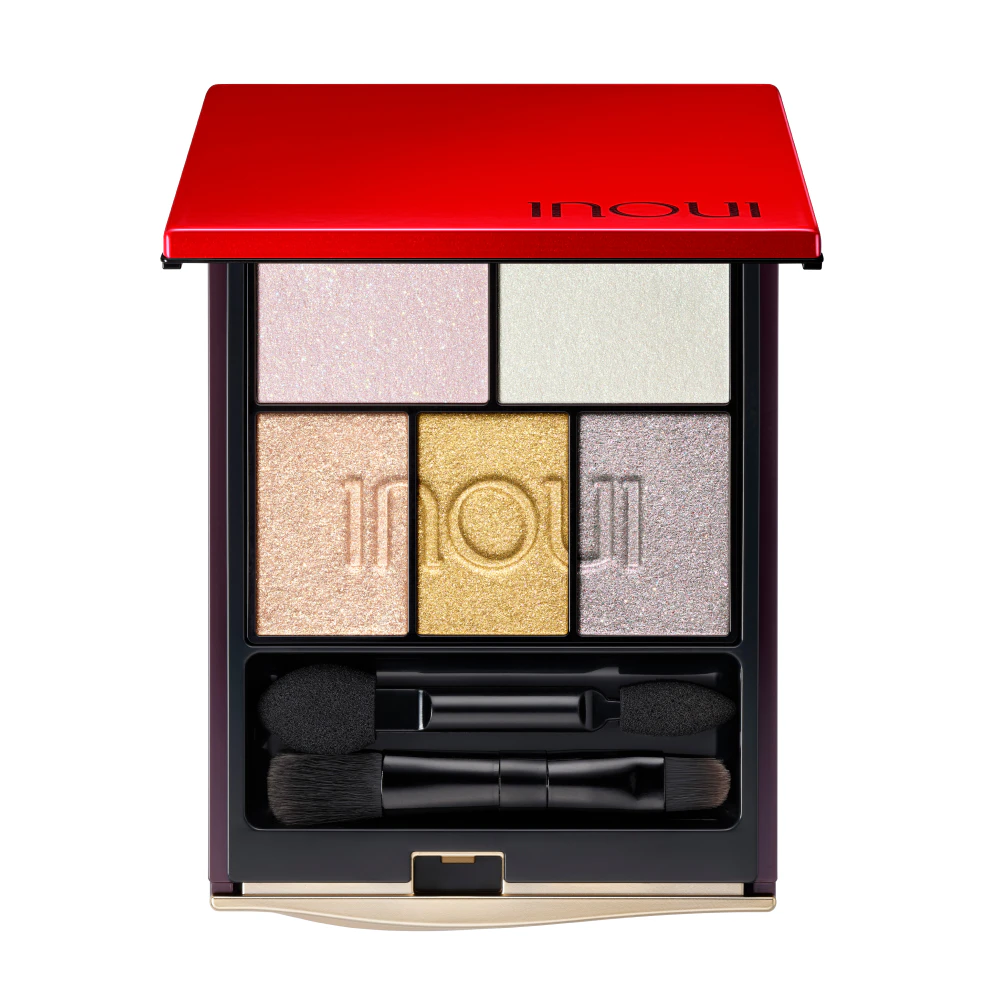
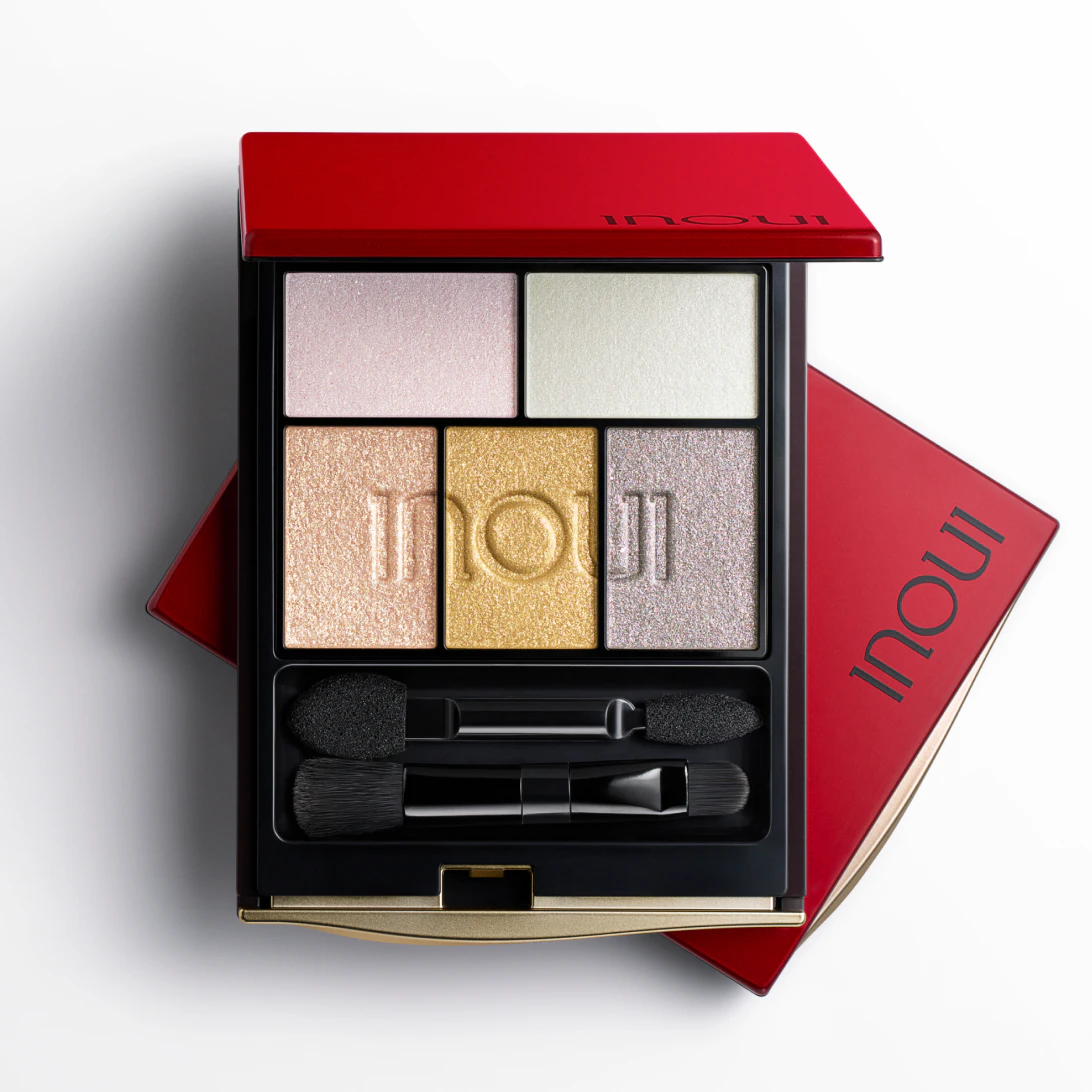
Rather than exploring variations of one familiar colour family, it combines five apparently unrelated colours:
| Position | Colour | What It Contributes |
|---|---|---|
| Upper left | Pastel pink | Soft warmth and reflected brightness |
| Upper right | Pastel green | Clear, fresh-looking light |
| Lower left | Champagne gold | Skin-compatible luminosity |
| Lower centre | Yellow gold | Warmer, more concentrated reflection |
| Lower right | Muted grey | Shadow and visual depth |
This is not a conventional colour harmony.
It is closer to a light palette.
The Grey Is What Makes Eyes 12 Work

The pastel pink and green will probably attract the most attention.
But the muted grey may actually be the most important colour in the palette.
Without it, pink + green + two golds could easily become decorative.
Beautiful, perhaps, but predominantly bright.
Grey gives the other four colours somewhere to go.
It introduces a low-reflection counterpoint to all that luminosity, allowing the lighter colours to appear clearer and the natural eye socket to retain depth.
This also prevents the palette from becoming overly sweet.
The pink doesn't need to become a pink eye look.
The green doesn't need to become a green eye look.
Both can exist as traces of coloured light against a more neutral structure.
That is a much more interesting proposition for adult makeup.
And the Pastels Aren't Really “Pastel Eyeshadow”

This is another important distinction.
If you hear "pink and green pastel eyeshadow," you might imagine chalky opaque colour sitting visibly across the eyelid.
That's not what INOUI is proposing.
The official description calls Eyes 12 a collection of deep, modern pastel colours, but specifically emphasises that all five have enhanced transparency.
MAQUIA similarly highlights the combination of modern pastels and translucent colour, while noting the use of INOUI's proprietary illumination-control pearl to create soft light around the eyes.
The skin underneath therefore remains part of the finished colour.
That's critical.
A translucent green over different skin tones won't look exactly the same.
Neither will the pink.
INOUI isn't trying to completely neutralise those differences.
The brand's wider philosophy is built around drawing attention to the colour, texture and structure someone already possesses.
Eyes 12 allows the wearer's own skin tone to participate in the palette.
Why Two Golds?


At first, champagne gold and yellow gold in the same five-pan palette might sound redundant.
They aren't performing exactly the same job.
Champagne gold sits closer to natural reflected skin light. It can connect the unusual pastel colours back to the complexion and make transitions appear more seamless.
Yellow gold introduces greater warmth and a more obvious point of light.
Using one rather than the other can therefore change the temperature of the finished makeup without changing the basic colour combination.
This is also what makes Eyes 12 more flexible than its first impression suggests.
You don't have to use pink, green, grey and both golds every time.
The palette can move according to which type of light dominates.
Think in Light Combinations, Not Five-Step Tutorials

There is no need to use all five colours simply because they're there.
A more useful way to approach Eyes 12 is to decide what you want the light around your eyes to do.
For the Most Natural Look
Start with champagne gold, introduce a small amount of grey for depth and finish with pink where you naturally want more warmth.
The result keeps the unusual colours almost invisible.
For a Clearer, Cooler Look
Let pastel green become the main reflected colour, supported by champagne gold and a controlled amount of grey.
The green should read as freshness rather than a block of green pigment.
For a Warmer Look
Use pink with yellow gold, then introduce grey close to the lash line or natural hollow of the eye.
This shifts Eyes 12 considerably warmer without turning it into a conventional peach palette.
For the Full Eyes 12 Effect
Use both pastels selectively, connecting them with gold rather than blending everything into one colour.
The grey can then restore depth where the lighter shades have visually brought the eyelid forward.
This is where the palette becomes most recognisably INOUI.
Eyes 12 vs the Most Popular INOUI Eyes Shades
If you're buying your first INOUI palette, 12 isn't automatically the best choice.
The permanent colours may still make more sense depending on what you want.
| Shade | Character | Best Choice If You Want |
|
|
Natural beige | The easiest everyday INOUI palette |
|
|
Greyish brown | Cool transparency without unusual colour |
|
|
Orange brown | More visible warmth |
|
|
Mauve brown | Depth with sophisticated colour |
|
|
Cool monochrome white | Light as the central feature |
|
|
Warm monochrome brown | Subtle warmth and structure |
|
|
Modern translucent pastels | The fullest expression of INOUI's light concept |
Shiseido currently identifies 04, 01 and 02 as three popular Eyes colours on its Japanese online store.
That makes sense.
They are considerably easier to understand.
But 12 arguably tells you more about what makes the formula unusual.
If You Already Own INOUI Eyes, Is 12 Actually Different Enough?
Yes.
And this is probably the group for whom 12 makes the strongest case.
Someone who already owns 01 or 04 doesn't particularly need another variation of beige or brown.
Eyes 12 offers something structurally different.
Its pink and green change the colour of reflected light.
The two golds allow the temperature of that reflection to shift.
Grey brings the eye back into shadow.
So even if you apply it using the same brushes and techniques as your existing INOUI palette, the result should occupy a noticeably different space in your collection.
It isn't simply "the autumn version" of INOUI Eyes.
Why INOUI Eyes Has Become One of the Brand's Key Products

There is also a reason we're paying this much attention to one palette.
INOUI Eyes isn't a niche item within the line.
The original product launched in February 2024, and by 2026 it has developed a substantial Japanese review base. On @cosme, the Eyes listing currently carries a 5.6 rating with more than 1,600 reviews and a Best Cosmetics designation.
That matters because INOUI is a relatively unusual brand outside Japan.
Internationally, people may recognise Shiseido without necessarily understanding where INOUI fits.
Eyes is one of the easiest products through which to understand the difference.
Where many colour cosmetics are designed to give the wearer a specific fashionable look, INOUI begins with a different assumption:
the face already contains the structure worth showing.
Colour is there to reveal it.
Eyes 12 Also Explains the Other Important 2026 Autumn Release
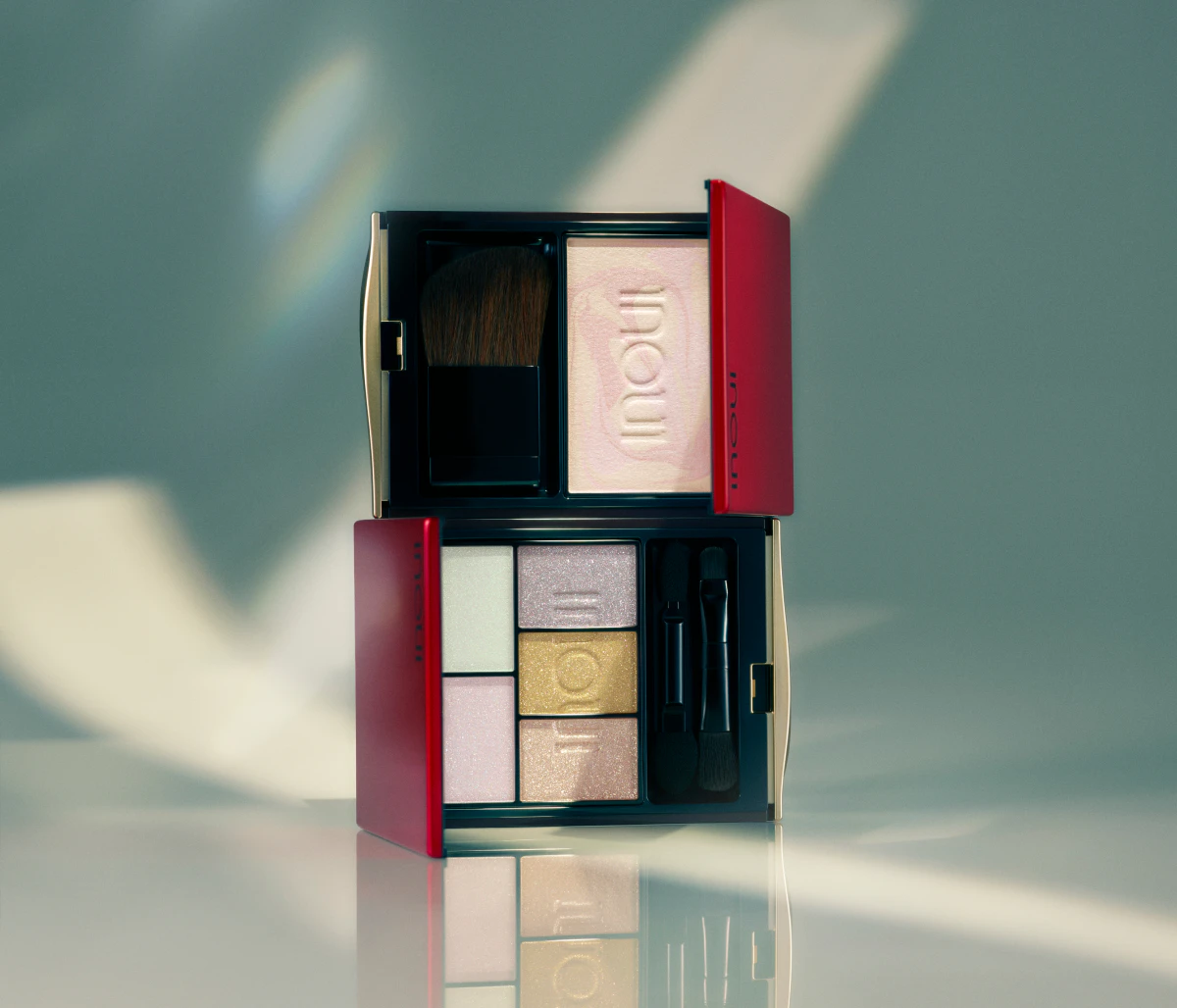
INOUI's August launch contains only two headline products.
One is Eyes 12.
The other is the INOUI Pressed Powder, previously limited and now becoming permanent.
That pairing is not accidental.
The Pressed Powder uses three different types of light to create delicate brightness and becomes increasingly translucent-looking as it is layered.
Eyes 12 uses multiple light effects around the eyes.
The complexion and eyes are therefore doing essentially the same thing:
using several kinds of reflection rather than obvious colour or coverage to reveal structure.
INOUI calls the Autumn 2026 idea “光の共鳴” — the resonance of light.
That phrase can sound abstract until you look at these two products together.
Then the logic becomes quite literal.

A Better Way to Decide Whether to Buy Eyes 12
Don't buy it simply because it's limited.
And don't avoid it simply because you don't normally wear green eyeshadow.
Ask yourself three questions instead.
Do you enjoy eyeshadow that changes with light more than eyeshadow that delivers strong pigment?
If yes, INOUI Eyes is already relevant.
Do you already own enough beige, brown, pink-brown and taupe palettes?
If yes, 12 offers a genuinely different colour structure.
Do you want the palette to look exactly on your eyes as it does in the pan?
If yes, this probably isn't the right product.
The entire concept depends on translucent colour interacting with your own skin.
INOUI Eyes 12 at a Glance
Product: INOUI Eyes 12
Category: Five-colour eyeshadow palette
Status: Limited Edition
Japan Release: August 21, 2026
Size: 5g
Colours: Pastel pink, pastel green, champagne gold, yellow gold and muted grey
Finish concept: Five translucent colours with different light effects
Best for: Dimensional, luminous eye makeup without heavy colour
Most distinctive feature: Uses coloured light rather than conventional light-to-dark gradation to emphasise the natural structure of the eye
Frequently Asked Questions
Is INOUI Eyes 12 limited edition?
Yes. Eyes 12 is a limited-edition shade launching in Japan on August 21, 2026.
How many colours are in INOUI Eyes 12?
Five: pastel pink, pastel green, champagne gold, yellow gold and muted grey.
Is Eyes 12 strongly pigmented?
INOUI specifically describes the colours as “透け色” — translucent colours. The palette is designed around transparency and different levels of reflected light rather than dense opaque pigment.
What is the most popular INOUI Eyes palette?
Shiseido's Japanese online store currently highlights 04, 01 and 02 as three popular colours. 04 is a deep mauve brown, 01 a natural beige and 02 a transparent greyish brown.
Is INOUI Eyes refillable?
Yes. The full Eyes 12 is ¥7,700 in Japan, while the limited refill is ¥5,060.
Is INOUI Eyes 12 suitable for mature eyes?
Its use of translucent colour rather than thick opaque pigment may appeal to people who prefer a softer eye look. The oil-coated powder is also designed to adhere smoothly and emphasise delicate gradation. However, the final effect will depend on individual eyelid texture and application.
The Takeaway
The most interesting thing about INOUI Eyes 12 isn't that Shiseido put pink and green into an autumn palette.
It's that neither colour needs to behave like conventional eyeshadow.
Pink can become warmth.
Green can become clarity.
Champagne can connect colour to skin.
Yellow gold can change the temperature of the light.
Grey can return depth to the eye.
Once you understand those roles, what initially looks like a strange five-colour palette becomes surprisingly logical.
And that is probably the best way to understand INOUI Eyes as a whole.
It isn't asking which five colours look beautiful together in the case.
It's asking something more specific:
what happens when five different kinds of light meet the shape, colour and texture of your own eyes?
Eyes 12 may be the most unconventional answer INOUI has created yet.